


Key Takeaways
- Resistance to assisted living often comes from fear, not stubbornness.
- How you start the conversation matters as much as what you say.
- Involving your loved one in every step can ease their hesitation.
- Today’s senior living communities look very different from outdated assumptions.
- A low-pressure visit can change everything for both of you.
When a Parent Says No to Assisted Living
You’ve noticed the signs, maybe a few close calls, a home that’s harder to manage, or health needs that are growing. You bring up assisted living, and the answer is a firm, flat no. It stings, and it’s stressful. But this moment is more common than you might think, and it doesn’t have to be the end of the conversation.
When a parent pushes back, the path forward isn’t to push harder; it’s to slow down, listen closely, and find a way to move through this together. The 6 tips below can help you do exactly that, with patience and a whole lot of heart. Knowing what to look for in a senior living community can also make those early conversations feel a lot less overwhelming.
Why Your Loved One May Be Saying No
Before anything else, it helps to understand where the resistance is coming from. For many older adults, the word “assisted living” carries a lot of emotional weight. They may picture losing their independence, their routines, or the sense of who they are. That’s a deeply human reaction, not an unreasonable one.
Their home holds decades of memories. Leaving it can feel like giving up something they can’t get back. Add to that some outdated ideas about what senior living actually looks like today, and it’s easy to see why they hesitate. Their “no” is usually rooted in fear, not a lack of trust in you.
How to Start the Conversation with Care
Choose the Right Time and Place
Timing really does matter here. A calm, private moment, not during a stressful day or right after a health scare, gives the conversation room to breathe. When emotions are already running high, it’s hard for anyone to truly hear what’s being said.
Try a relaxed afternoon at home, over a shared meal, or during a quiet walk. The goal is connection first. When your loved one feels safe and unhurried, they’re far more likely to open up.
Words That Help, Not Hurt
Lead with love before you lead with logistics. Something as simple as “I’m bringing this up because I care about you” can completely change how the conversation lands. Ask questions more than you make statements, like “What worries you most about this?” It goes far beyond a list of reasons why they should consider it.
Validate their feelings before sharing your concerns. Let them know you hear them. That kind of acknowledgment builds trust, and trust is what makes these conversations actually go somewhere. If caregiver stress is building on your end, too, that’s worth paying attention to as well.
6 Tips to Help When They Push Back
- Listen without an agenda first. Give them space to share what’s really going on before you respond. You might be surprised by what comes up.
- Involve them in every decision possible. The more control they feel, the less threatening the process becomes. Let them weigh in on everything.
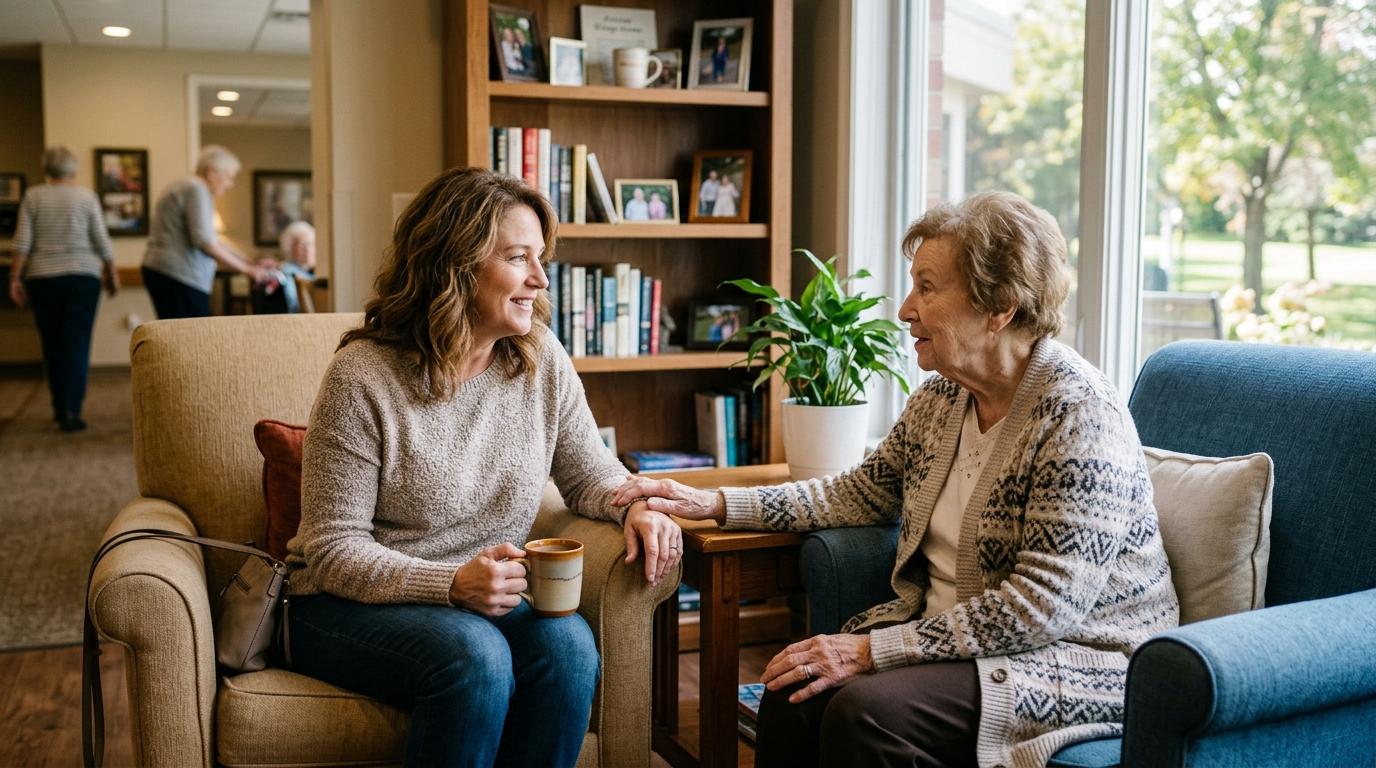
- Take a tour together, no pressure attached. A visit to a senior living community can replace fear with familiarity. Frame it as curiosity, not commitment.
- Address specific fears one at a time. Don’t try to solve everything in one sitting. Pick one concern and talk it through fully before moving on.
- Bring in a trusted third party to help. Sometimes a doctor, a close friend, or a spiritual advisor can say what you’ve been saying, and it lands differently.
- Give it time between conversations. Planting a seed and walking away is sometimes the most powerful move you can make.
What Assisted Living Actually Looks Like Today
More Freedom Than You Might Expect
Modern assisted living communities are built around the individual, not the other way around. Care plans are personalized, meaning your loved one gets support where they need it and space where they don’t. That balance of independence and care is something a lot of families are genuinely surprised by.
Daily programs, social activities, and spiritual support give residents a rich, connected life. There’s a real community that includes friendships, shared meals, and a sense of belonging that can be hard to find anywhere else. Take a look at the monthly activity calendar to get a feel for what daily life actually looks like.
Support That Grows with Their Needs
One of the most reassuring things about assisted living today is how seamlessly care can adapt over time. As needs change, support grows without uprooting daily life or moving to a new place. The on-site amenities and services bring comfort and ease right to your loved one’s door.
Coordinated health support, including in-home primary care, means fewer stressful trips and a more consistent experience overall. It’s care that works around their life, not the other way around. Reviewing a helpful assisted living move-in checklist together can also make the whole idea feel more manageable.
Next Steps When You’re Ready to Explore Options
At Boden Senior Living in Coon Rapids, the door is always open, and there’s never any pressure to rush. A low-key visit can help your loved one see what life here actually feels like, on their own terms. Ask about lifestyle options, not just care levels, and let your loved one set the pace every step of the way.
You don’t have to have it all figured out to take the next step. Just start with a conversation, and let the rest unfold from there.